Introduction
In many schools today, early success in mathematics is proudly measured by how far children can count.
“Our kindergarten children can count till 200… even 500.”
While this may sound impressive, it reflects a serious misunderstanding of how mathematical thinking actually develops. Decades of research in cognitive science and mathematics education tell a very different story—one that prioritises understanding over acceleration.
What Research Really Says About Early Mathematics Learning
Insights from Cognitive Guided Instruction (CGI)
Thomas Carpenter’s Cognitive Guided Instruction (CGI) framework outlines a clear and evidence-based progression in children’s mathematical development:
Direct Modeling → Counting Strategies → Derived Facts → Fluency
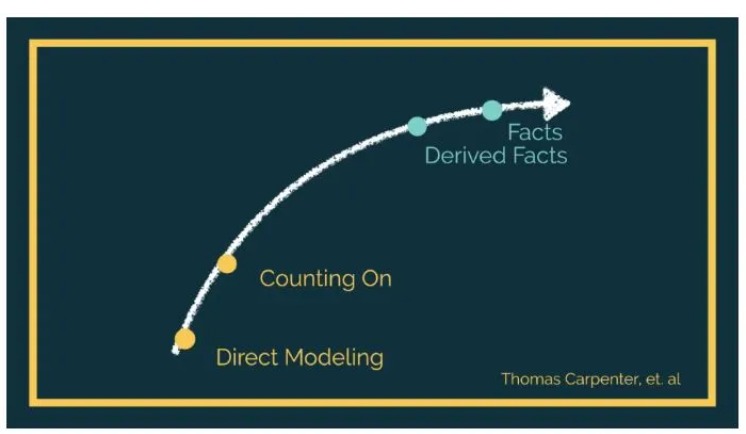
These stages are not optional. They are the foundation upon which genuine mathematical understanding is built.
When children are rushed into extended counting (200, 500, or beyond), they often skip the experiences that help them understand:
- quantity
- number relationships
- part–whole thinking
- structure within numbers
The result?
Children may appear advanced, but their knowledge is fragile—easy to recite, easy to forget, and difficult to apply in real problem-solving situations.
What Cognitive Science Confirms
Multiple landmark studies reinforce the same concern:
- Karen Fuson showed that children often learn counting as a rote chant, disconnected from meaning.
- Gelman & Gallistel demonstrated that true counting requires conceptual principles such as:
- one-to-one correspondence
- stable order
- cardinality
- Butterworth and Stanislas Dehaene established that number sense, not early symbolic performance, predicts long-term mathematical success.
- Duncan et al. confirmed through longitudinal studies that early number sense is a strong predictor of future academic achievement.
In short:
👉 Counting far is not the same as understanding numbers.
Global Curriculum Frameworks All Say the Same Thing: Slow Down
What is striking is that this research consensus is reflected across global early years frameworks:
United Kingdom – EYFS
- Emphasises deep understanding of numbers to 10
- Focuses on subitising, number relationships, and meaning
India – NCF Foundational Stage (2022)
- Explicitly warns against pushing formal, rote instruction in early years
- Strongly advocates play-based learning and number sense
Australia – Foundation Curriculum
- Focuses on counting to around 20
- Emphasises partitioning, quantity, and structure
United States – Common Core
- Limits kindergarten counting to 100
- Prioritises cardinality and conceptual understanding
These frameworks are not opinions.
They are the result of decades of research, classroom evidence, and cognitive science synthesized by leading educationists.
A Necessary Provocation for Schools
When schools ignore this body of evidence and accelerate anyway, the issue is not ambition.
It is judgement.
When CGI, cognitive science, longitudinal studies, and global frameworks all say “slow down”, choosing to ignore them is not innovation.
It is educational malpractice.
Rethinking What “Excellence” in Mathematics Really Means
True excellence in early mathematics is not measured by how far children can count.
It is measured by whether children:
- understand what numbers represent
- can reason about quantities
- can decompose and compose numbers
- can use numbers meaningfully in real-life situations
These are the skills that create confident problem solvers, not fast counters.
Final Takeaway
If we truly care about children’s long-term success in mathematics, the bravest move we can make is not to accelerate.
It is to:
- respect the science
- trust the learning process
- and prioritise understanding over performance
Because real mathematical thinking cannot be rushed—and it should never be reduced to counting till 500.