If a child writes kat instead of cat, should we correct the spelling immediately — or congratulate them?
This is a question many parents, teachers, and early childhood educators often ask:
“When we teach phonics, children start writing ‘wrong’ spellings like byootiful instead of beautiful. Shouldn’t we correct them straight away?”
The short answer: Not always.
The long answer reveals something powerful about how children actually learn to read and write.
What’s Really Happening When Children Spell “Wrong”?
When a child writes byootiful, they are not guessing.
They are doing exactly what phonics instruction teaches them to do:
- Listening carefully to spoken sounds
- Breaking words into phonemes (individual sounds)
- Representing those sounds using letters
This stage of literacy development is called invented spelling.
Invented spelling is a crucial milestone in early reading and writing development. It shows that a child is actively thinking, analysing sounds, and applying phonics knowledge — not memorising words blindly.
Invented Spelling Is a Sign of Thinking, Not Failure
In phonics-based learning, children are encouraged to decode and encode words logically.
So when a child writes:
- kat for cat
- enuf for enough
- byootiful for beautiful
they are demonstrating:
- Sound–letter awareness
- Phonemic understanding
- Confidence in expressing ideas through writing
These are foundational skills for strong literacy.
A Familiar Example from Popular Culture
In the film Taare Zameen Par, the child writes enouf instead of enough.
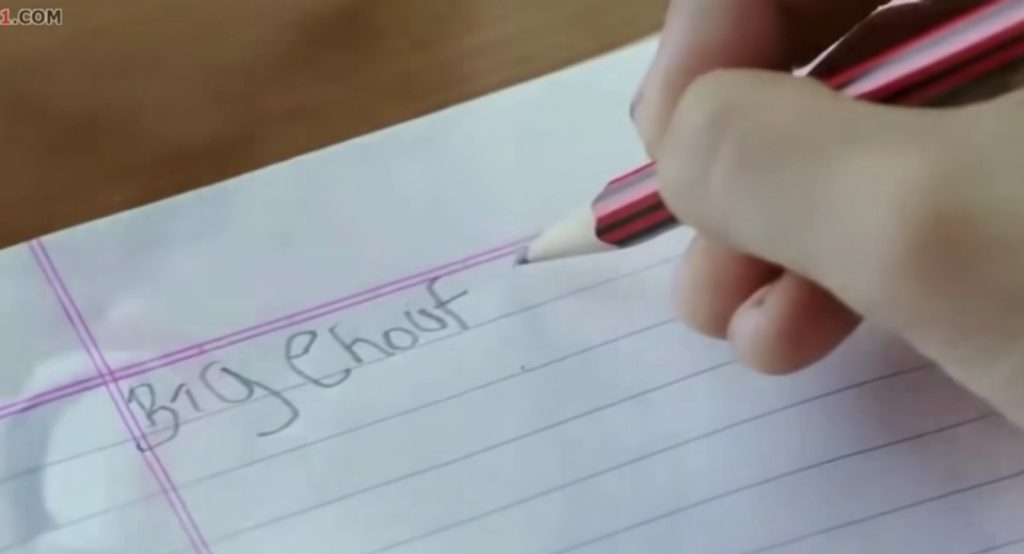
He isn’t careless.
He isn’t lazy.
He is thinking phonetically.
This moment perfectly captures how children process language when they are learning to read and write through sound-based strategies.
Try This Activity Yourself
Take a moment to read this word:
apursepshun
Its meaning is the process of understanding something by relating it to prior knowledge or experience.
Did you read it as apperception?
- If yes — congratulations! You decoded it phonetically.
- If not — you probably reread it and adjusted.
Now imagine a five-year-old child encountering the word enough for the very first time.
Without memorisation, spellings like enuf or enouf are not mistakes —
they are logical, thoughtful attempts to make sense of language.
When Should We Correct Spelling?
❌ Not during free writing
❌ Not when children are building confidence and finding their voice
Instead, effective literacy instruction focuses on:
✅ Modelling correct spelling naturally
✅ Teaching spelling rules systematically and at the right developmental stage
✅ Allowing children to experiment with language without fear
This balance supports both accuracy and creativity in learning.
The Key Takeaway for Parents and Educators
Invented spelling is not a failure of phonics.
It is proof that phonics instruction is working.
When a child writes kat with a K, they are:
- Thinking deeply about sounds
- Applying phonics rules independently
- Actively constructing meaning
And that is something worth celebrating
Strong readers aren’t created by memorising words —
they’re created by learning how to think about language.