
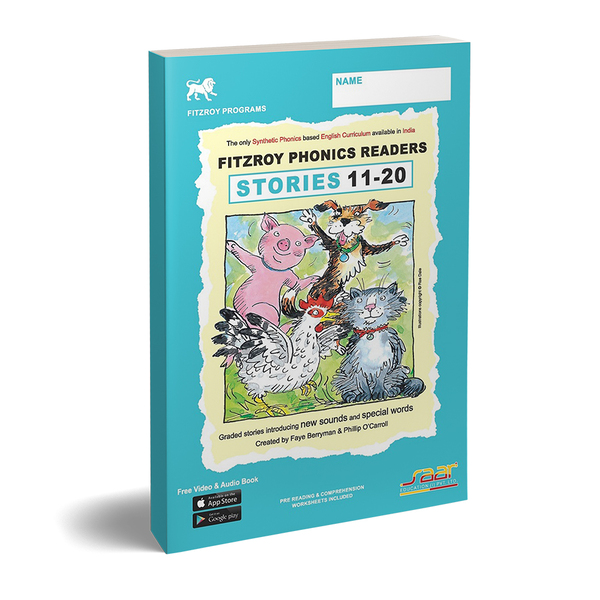
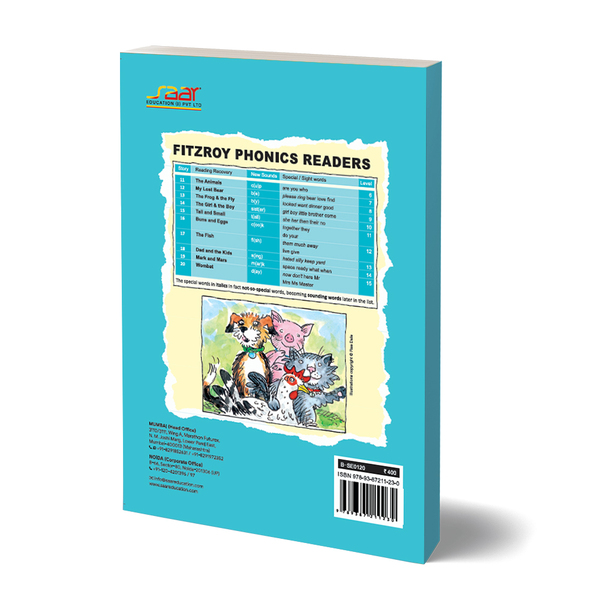
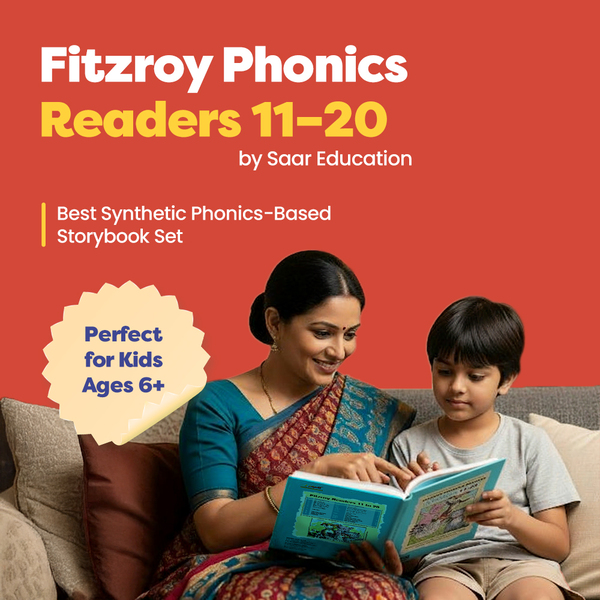
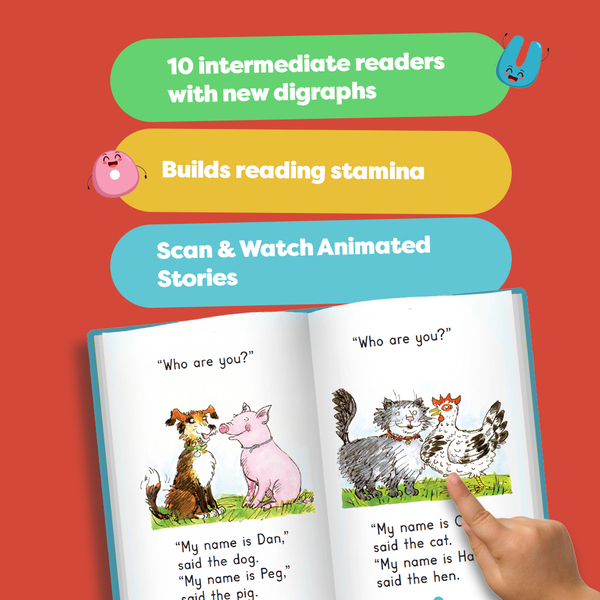
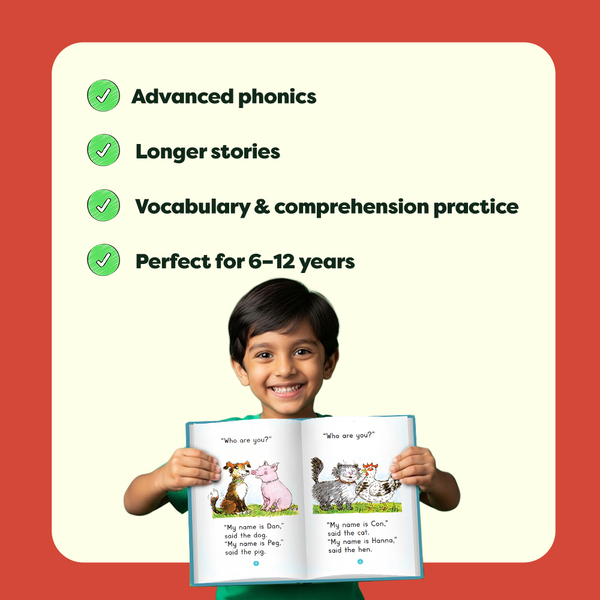
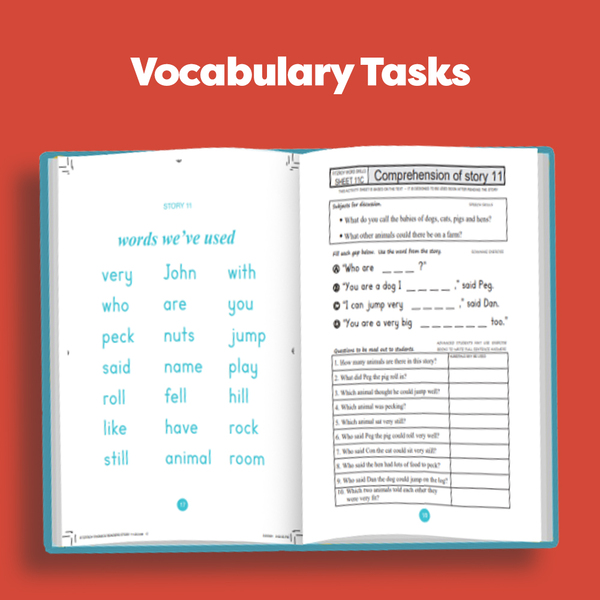
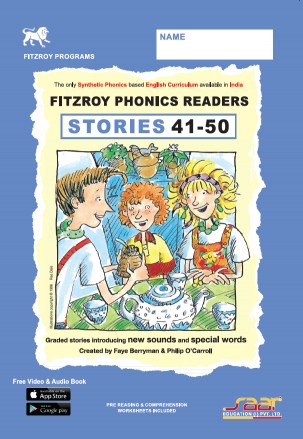
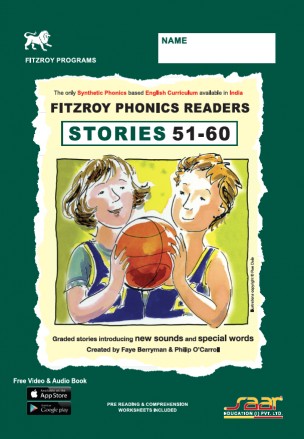
Fitzroy Phonics Readers 11–20 | Synthetic Phonics Storybooks for Early Reading & Pronunciation Skills | Introduces New Sounds, Sight Words & Blending Practice | Audio Supported | Best for Ages 5–7 | by Saar Education
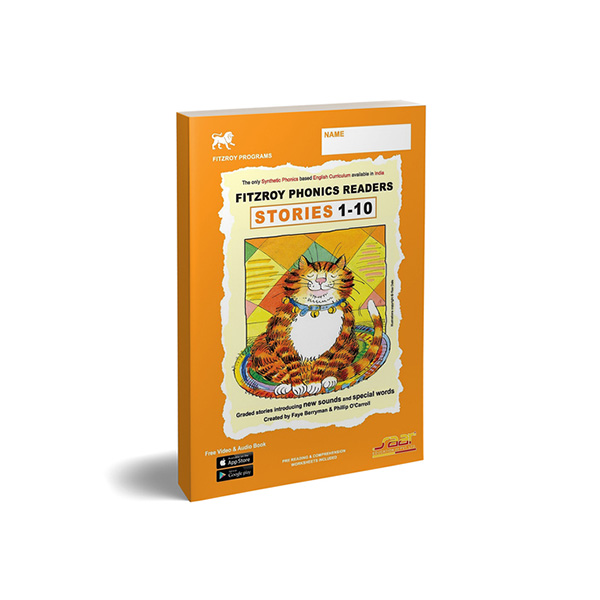
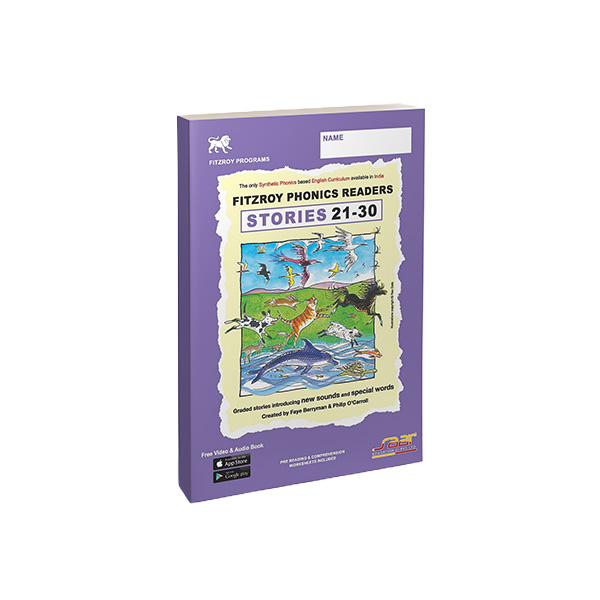
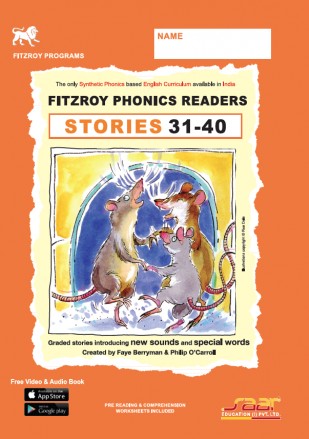
Book Details
Turn Struggling Readers into Confident Young Readers!
Help your child improve reading fluency, pronunciation, and word recognition with these fun and structured synthetic phonics storybooks for ages 5–7. With graded stories and audio support, children learn new sounds and special words step by step — making reading easier, smoother, and more enjoyable.
This Book Helps Solve:
1. Difficulty sounding out words
2. Poor reading confidence
3. Slow or hesitant reading
4. Pronunciation and vocabulary struggles
5. Trouble moving toward independent reading
Why Most Parents & Teachers Love This Book
1. Easy Step-by-Step Learning
Stories gradually increase in difficulty so children never feel overwhelmed.
2. Audio Supported Reading
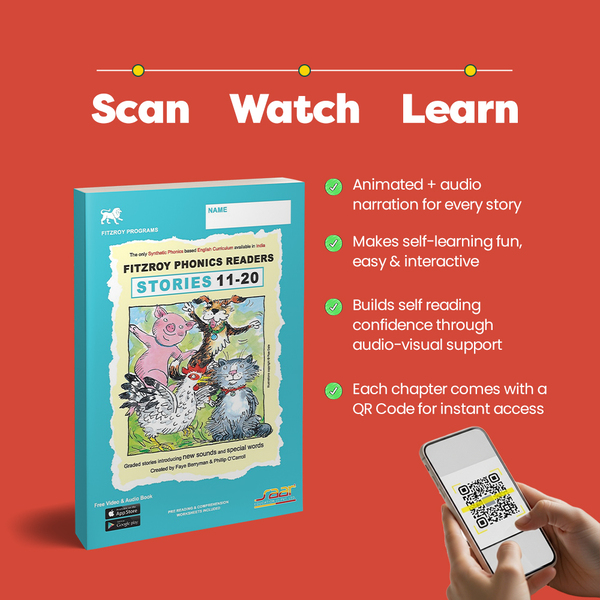
Kids can scan, watch, and listen to improve pronunciation and reading fluency.
3. Builds Confidence Fast
Small reading wins in every story encourage children to read independently.
4. Fun & Engaging Phonics Practice
Interactive stories keep children interested while strengthening phonics skills.
Perfect For:
- Kids aged 5–7 years
- Early readers & beginners
- Home learning & classrooms
- Guided reading & phonics practice
Give Your Child the Confidence to Read Fluently!


Similar Products
About This Product
From our brand
About Smile
The SMILE (Structured & Systematic, Multi-Sensory, Integrated & Inquiry-based, Learner-Centred, and Experiential) curriculum for Foundational and Preparatory academic levels is governed by the principles of Experiential Learning and aims to build and develop the 21st-century skills of Communication, Critical Thinking, Creativity, and Collaboration in the learners.
Aligned with the guidelines of NEP 2020, this curriculum is based on cognitive psychology, constructivist learning theory and incorporates the best teaching practices. The classroom conduction of the SMILE curriculum follows the 3C format of Connect, Conduct, and Conclude and is formulated from the 5E Instructional Model and the Inquiry-cycle Model, to build academic and life skills as well as transversal competencies.

About Intellisense
Intellisense Pre- Primary Curriculum has been designed picking the best from all around the world. The curriculum has international award winning products from Jolly Phonics, Fitzroy Method, Evan Moor, Highlights and Kids Creativity School. The pedagogies used in these products have been tried and tested for more than two decades worldwide.
The major benefits of using these researched pedagogies are:
- Children are able to achieve literacy levels two years ahead of their chronological age.
- The structured and systematic approach helps both the teachers and the children irrespective of their diverse backgrounds or learning styles.
- The approach will make your classroom inclusive.
About Hopscotch
Hopscotch curriculum for classes K-5. Story-telling, visual thinking strategy, experimentation, poems and creativity are the pivot of the curriculum to make cross- curricular learning:
- Subject- wise individual books provided with practice worksheets, based on Bloom’s Taxonomy for classes 1 to 5.
- English curriculum is covered through Synthetic Phonics (decodable stories) for Pre- Primary classes and blended approach (decidable and regular text) for classes 1 to 5.
- Theme based planning for pre-primary across the learning areas. Lesson plans provided on the 5 E's for primary.
- Integrated and cross - curricular art curriculum.

About Ripples
- Cost - effective curriculum with 8 monthly books (all subject included) and 1 combined book on Seasons and Festivals & Jotter for easy handling.
- It’s a skill - based learning with English taught with synthetic phonics approach, art integration & Maths taught with CPA approach. Visual Thinking strategy, songs and creativity act as the pivot for course conduction. Wipe-Clean Fun Mat is given for practice of different concepts.
Collaboration/Series of SAAR Education
Customer reviews
Review this product
Share your thoughts with other customers
Write a product review